
Murder Bay
It's down by the waterfront that the seediest and most dangerous parts of a city thrive. So it was in Washington, DC during the 1920s. President Hoover proposed to finish filling in and relandscaping the canals that led from the Potomac nearly to the foot of Capitol Hill. These canals became Constitution Avenue and Independence Avenue. FDR executed on Hoover's pland, building on the former red-light district the Federal Triangle that now "houses" the National Archives, FBI, IRS and other massive structures. This post describes our visit to the National Archives.


We were advised to be early before the Archives opened at 10 am in order to meet our guide. For these ten days, the Archives was showing all 27 amendments to the Constitution in honor of Constitution Day. We met Kate, a former attorney prosecuting international finance cases. She was in her element.
We could show you photo after photo of these documents: the Declaration of Independence, the Constitution, the Bill of Rights, all the amendments to the Constitution and the Magna Carta. But the images are well-faded and the print is very small. They are preserved behind layers of protection lest climate change protesters dump more red paint on to the glass.

This document was in essence a PR piece designed to rally the populace and soldiers to the cause of independence from Great Britain. Washington used it to good effect with his troops. But it alone did not create the independence it promoted. It is also essentially two documents, the latter part the list of grievances, the former the inspired statment in inalienable rights given by our Creator. By the time we get to Woodrow Wilson and the Progressives, the first part is no longer of use and the second part is just an historical statement of the times.
The more formal Lee Resolution, or the "Resolution for Independence" was passed on July 2, 1776.
The Constitution was adopted in 1789 after several years of drafting and writing and rewriting. It came after the failure of the previous government under the Articles of Confederation.
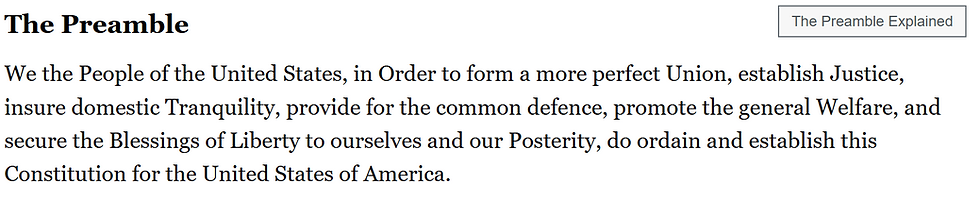
There are now 27 amendments to the Constitution, including the original 10 articles in the Bill of Rights. The original articles lay out how the government is to operate and enumerates the powers of each branch. It is an impressive document, one that has been emulated around the world.
The Bill of Rights were appended to the Constitution in order to make certain these rights were a part of the government. Here are just the first four amendments.
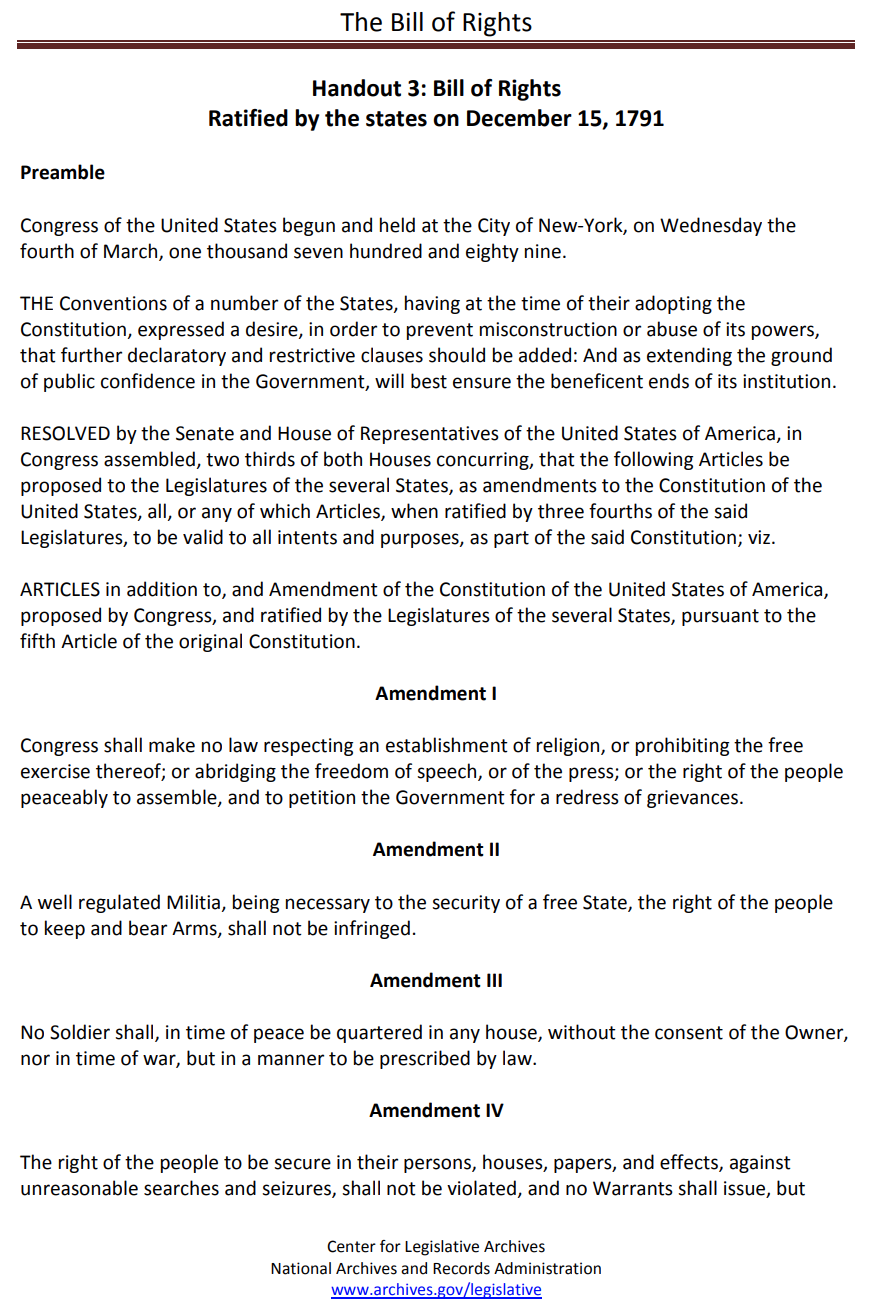
Together, these are viewed as foundational and even providential. They are part of what makes America unique. We are blessed to be able to see them and to be reminded of their importance.
The other document that is central to the evolution of human rights is the Magna Carta.
(I had a Latin teacher in high school, Mr. James Carter, who was rather large. His nickname was "Magna Carter.")
This document is as central to our legal identity as any of the others we've discussed. Read more about it here: https://www.britannica.com/topic/Magna-Carta

That was it. Our civics lesson was complete. here were other exhibits that we saw, but seeing these documents was really our main purpose.
Cheers,
Brio


Comments